
Kansai 2018
- Jer
- Mar 31, 2018
- 27 min read
Updated: Aug 22, 2021

Introduction
The quest to explore Japan never ended and I was of course determined to fly back to the Land Of the Rising Sun to visit more places. Three months after coming back to our little Red Dot, I had the opportunity to go overseas again during end March as my NS unit had allocated time for us to clear our leaves. So there it is, a journey for me to escape with companions: Justin and Xuan Ting to explore another region of Japan.
Fun Fact: This trip is planned by solely me and it was so exciting to plan from the attractions to the transport used. It was a blessing that none of the plans were majorly disrupted. :D
Details Of The Trip
Duration: 23 - 30 Mar 2018, 7D6N (30 Mar was spent travelling back from Japan)
Cities/Towns Visited:
- Kobe, Hyogo 神戸市
- Kyoto, Kyoto 京都市
- Uji, Kyoto 宇治市
- Nara, Nara 奈良市
- Osaka, Osaka 大阪市
- Minoo, Osaka 箕面市
- Ikeda, Osaka 池田市
Accommodations:
- Hotel Morgenrot (Nearest Stn: Arima Onsen Station, 有馬温泉駅)
- The Pagoda Experience (Nearest Stn: Tōji Temple Station, 東寺駅)
- Minn (Nearest Stn: Jūsō Station,十三駅)
Transport Passes

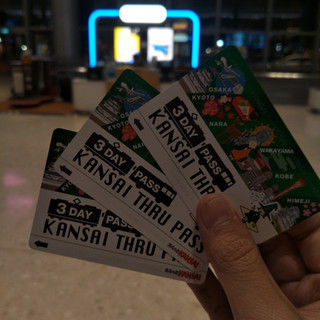


(Clockwise Left to Right: Kansai Thru Pass 3 Days, Hankyu Tourist Pass, Kansai One Pass, Kyoto City Bus and Subway Pass)
Kansai Thru Pass (3-Day): A pass that allows you to travel on many railway lines, buses and subways across cities in the Kansai Region. Moreover, this pass does not require you to use on consecutive days! We used it on Day 1, 2 and 5 to cover the rail travels. This makes it a much better deal than sticking to buying JR pass as our travels were mainly on private railways.
(We got this from Changi Recommends which sold at SGD61, cheaper than that of Klook ($63.40) or purchasing in Japan (5,200 yen/SGD62.40))
Hankyu Tourist Pass (2-Day): A pass that allows unlimited travels on most of the Hankyu Lines. This was particularly useful when we were travelling in Osaka as our accommodation was located near a Hankyu Station (Jūsō Station) and we visited attractions along the Hankyu Takarazuka Line on Day 6 and 7.
(We got this pass from Klook which sold at SGD15.90, cheaper than purchasing in Japan (1,400 yen/SGD16.80)) Kansai One Pass: An ICOCA concession card that is able to be used in the Kansai region. Both the JR, private railway lines and subway accept the usage of Kansai One Pass. The pass can also be used to make payments in convenience stores and other places as well. In addition to these, what distinguishes the Kansai One Pass from an ordinary ICOCA card is that it gives discounts or complimentary items when visiting certain famed attractions within the Kansai region. We used this rechargeable card for the lines which the other passes do not cover. (We got this pass from Nankai Tourist Information Center for the price of 2,000 yen/SGD24 (1,500 pre-loaded value and 500 yen refundable deposit) instead of opting to purchase the ICOCA card from Klook (SGD26.80))
Kyoto City Bus and Subway Pass (1-Day): A pass that enables you to travel unlimited times on all Kyoto subway lines, city buses (flat-fare of 230 yen per ride). We used this pass for Day 4.
(We got this pass from the vending machines located outside the gantry of Kyoto Subway Station for the price of 900 yen)
Legend:
¹ denotes the Kansai Thru Pass was used
² denotes the Hankyu Tourist Pass was used ³ denotes the Kansai One Pass was used ⁴ denotes the Kyoto City Bus and Subway Pass was used
Day 1 (Singapore, Singapore -> Kobe, Hyogo)

(Cathay Pacific once again for travels back to Japan)
Coincidentally, while searching for flight tickets, STA Travels offered Cathay Pacific flights to Osaka for $807.90 and flying with the Hong Kong carrier was quite a pleasant experience the other time around so I booked Cathay Pacific once again for our adventure. After transiting in Hong Kong for nearly 3hrs, we finally touched down in Kansai International Airport, Osaka at 1230pm. We exchanged our Klook voucher for the Hankyu Tourist Passes at the H.I.S counter at KIX and rushed off to take the Nankai Limited Express Airport Line¹ and ventured into downtown Osaka, the Namba district and changed to the Midosuji Subway Line¹ to reach Umeda.

(Nankai Limited Airport Express Line)
Famished after a long flight, we explored the labyrinth of the shopping malls in Umeda and found a curry restaurant which we settled for because I was craving for some Japanese curry.


(Top: Exterior of San Marco Restaurant, Bottom: Beef Curry with Pork Cutlet)
The San Marco Curry Restaurant soon served my beef curry rice in no more than 15mins. As I was not expecting a generous amount of beef, I ordered an additional amount of pork cutlet. The curry did not really strike me much as it tasted ordinary but I felt that the juicy pork cutlet served was a nice match with the curry. I would recommend getting a pork cutlet curry (it's on the menu) to make your money worth it. Overall, my 1,100 yen curry meal was only a meh.
We soon proceeded off to Sannomiya, Kobe via the Hankyu Kobe Line¹ which we did numerous transfers to the Seishin-Yamate Kobe Subway Line¹, Hokushin Line¹ and Shintetsu Sanda¹ and Arima Line¹ before arriving at our final destination: Arima Onsen.

(Shintetsu Arima Line)
The small town tucked away from the city of Kobe had a nice village feel and was filled with many locals and tourists walking around to take pictures or trying their local delicacy: the Arima carbonated biscuit. However, we were more focused on trying to get to out accommodation (Hotel Morgenrot) and after getting lost due to our Google Maps screwing up a little, we managed to navigate just in time before the last check-in time of 6pm. We checked in and decided to snuggle in our beds for awhile before heading out at night.

(Us trying out the yukatas but we had no idea if we were wearing it properly or not xD)
At 8pm, we woke up and decided to head to an onsen to warm ourselves up. Onsen was the primary reason why I decided to opt for a night in Arima as Arima boasts the reputation of being one of the oldest onsen towns in Japan. Chilly it was as we wore the yukatas provided by our hotel out on the streets and we scurried to the onsen which was a 5-mins walk away but we were freezing wearing just that thin layer of clothing in 5 degrees weather.

(Exterior of Kin-No-Yu)
We soon entered Kin-No-Yu (金の湯) to warm our bodies and I would say it felt so amazing just to be dipping into water of 42 degree celsius while we were freezing a few minutes ago outside on the streets. The admission was free (Usual Admission: 650yen) as our accommodation gave out one free voucher to any of the two local onsens for each guest. Even though it was 8pm at night, we were surprised to see many locals over there enjoying the onsen and there was even a large group of middle-aged men just sitting around and having a cohesion, most probably coming to chill after a long day at work.
After staying in the onsen for about half an hour, we decided to head back to our accommodation and research on a possible place to have supper as we had skipped dinner. However, we soon regretted our decision to have dinner at 10pm because there were no restaurants left opened by then. We had no choice but to resort to having supper at Arima Grand Hotel's Hananoren (花のれん), which was a 15mins walk away.

(Meal at Hananoren)
I ordered a bowl of salt plum Ochazuke (Green Tea Rice) and roasted clams as a side. Disclaimer that the salt plum tastes very different from that of sour plums. This plum made me wince so much that I decided to just finish the plums first before having it with the rice. Order it if you enjoy trying sour food. The clams on the other hand was nicely roasted and I enjoyed it greatly. For 1,231 yen, of which 540yen for the clams and 690yen for the Ochazuke, the meal was worth as a late night supper snack but not worth for a dinner (oops).
We retreated back to our accommodation as we slept soundly, trying to catch some sleep missed out during our flight.
Day 2 (Kobe, Hyogo -> Kyoto, Kyoto)

(Exterior of Gin-No-Yu)
We had to check-out at 10am but surprisingly, I still had the energy to wake up at 8am (must be the usual reveille timings in camp). Eager to utilise my time at the onsen town fully, I decided to visit the other local onsen Gin-No-Yu (銀の湯), located right outside out accommodation. Justin decided to sleep in so Xuan Ting and I headed down to start the day on a fresh note. We paid the admission fee of 550 yen and headed in. Unlike the Kin-No-Yu which has two hot springs with "gold" (or more brown/bronze) coloured water, this one had transparent clear water and had only one large spring to dip in along with a sauna. Nothing much about it as we were done in around 30mins and I bought myself a famed Arima Cider before heading back to accommodation.
We wheeled our luggage along the narrow alleyways of the town as we navigated to the local bakery to have our breakfast. The bakery, Pao De Beau, was located right opposite the Kin-No-Yu and had an open terrace for us to sit and enjoy warmly toasted bread (they will offer to reheat the bread only if you are having it there).


(Top: Exterior of Pao De Beau, Bottom: Cannot wait to start on our food!)
The bread were reasonably priced at around 200 to 300 yen each and I wolfed down 3 pieces of bread (2 kinds of pizza and 1 kind of toast) while the others had 2 pieces each. It was delicious and I especially loved one of the pizza that had mushroom inside mmhmm, yummy for my tummy.
We soon proceeded to Sannomiya, Kobe via Hankyu Kobe Line (refer to Day 1 for the transfers) to deposit our luggage in the coin lockers before heading to Kasuganomichi Station via Hanshin Main Line¹ to visit the Great Hanshin-Awaji Earthquake Memorial Disaster Reduction and Human Renovation Institution (阪神・淡路大震災記念 人と防災未来センター).


(Top: Exterior of the Museum, Bottom: Watching the videos with the English audio guides)
Technically, we were still considered as university students due to our age (despite not having any form of student identification) so they gave us the admission fee of 450yen. Even though many parts of the museum prohibit photography, the museum was a very enriching experience as we sat through many videos that showed the devastating effect the 1995 Earthquake had on the city of Kobe. It also showed how the city managed to rebuild itself after the incident and how they remained united as one to survive through the ordeal. Overall, if you are a Geography student (having learnt about tectonic plate movements) or interested in understanding the backstory of one of the most devastating earthquakes in Japan (the other being the 2011 Fukushima Earthquake), this place should be on your go-to list when visiting Kobe.


(Top: Streets of Nankinmachi, Bottom: Exterior of Kisshōkichi)
We subsequently proceeded to Motomachi via Hanshin Main Line¹ to visit one of 3 Japan's Chinatowns, Nankinmachi (南京町). Familiar sights and sounds as the streets were lined with vendors selling Chinese and Japanese specialties alike. We found and made our way to the famed Kisshōkichi (吉祥吉), which was featured in many websites for having prices as low as 1,000yen to having a taste of Kobe Beef. We ordered one steak burger each and sank our teeth right in. My advice after tasting would be: If you wanted to have Kobe beef, it is pretty much better if you went to a proper restaurant to have instead of trying the Kobe beef from this establishment as it pretty sure did not strike me as having a "melting" texture.
Dissatisfied with our experience of Kobe Beef, we certainly did not want to end the Kobe journey here and decided to venture onto Steakland Kobe located near Sannomiya via the Hanshin Main Line¹. Lucky for us, it was not very crowded as we sat down and ordered the Kobe Steak Dinner which promised 200g of Kobe Beef.


(Top: The side dishes that came in the set, Bottom: The beautiful star of the show)
The set itself included some small appetizers such as salad, pickled cucumber as well as soup, which were just the entrees before the main star: the juicy and succulent Kobe Beef. I ordered it to be served at medium rare and oh golly, the texture was just so good that I just kept serving one piece after another into my mouth. For a price of 5,900yen for a Kobe beef experience this good, the first timer here can definitely look forward to revisit this place again during travels back to Kobe.
We collected our luggage from the coin lockers and proceeded to our next stop for the trip: Kyoto. We arrived at Tōji Station via numerous transfers, through the Hankyu Kobe and Kyoto Line¹, Kyoto City Subway Karasuma Line¹ and the Kintetsu Kyoto Line¹ and checked into our accommodation (The Pagoda Experience). Thumbs up to the most fluent Japanese local speaking English as he was clear in conveying instructions with regards to our stay, allowing us to have a peace of mind and check-in to the hotel.
Day 3 (Kyoto, Kyoto)

(Breakfast at MOS Burger)
We slept in and woke up a bit late (unintentionally) so we decided to just get a quick bite at the nearby MOS Burger located right outside the train station for breakfast. I got an Ebi burger set meal for 856 yen and I must say that the quality of MOS in Japan is definitely something you should try if you do not find the MOS Burger in your country nice. The main reason for my Ebi Burger was because I tried Mcdonalds' Ebi Burger the previous time in Japan and it was extremely disappointing. This however, was much more flavourful and was also much crunchier as compared to Mcdonalds. So it is MOS 1 and Macs 0 for the Ebi burger contest.
We did not want to waste anymore time as we were worried of having to squeeze with the morning crowd (it was Sunday but still had quite a number of people) so we made our way to the Hankyu Arashiyama Station via some transfers from the Kintetsu Kyoto Line³ to the Kyoto Subway Karasuma Line⁴ and the Hankyu Kyoto³ and Arashiyama Line³, purchasing the Kyoto One Day Bus and Subway Pass along the way.


(Top: Togetsukyo Bridge, Bottom: Full bloom trees!)
Upon arriving, there were already many people outside of the station and we scurried along to see the scenic Togetsukyo Bridge (渡月橋) while making our way to the famous Sagano Bamboo Grove (嵯峨竹林の道) . Disappointingly, the stretch of bamboos was barely one kilometre and it was filled with many tourists (10am by then) which sort of ruined the serene atmosphere of the bamboo grove. Tips: Come before 8am which is the timing the crowd streams in.

(It is still so difficult to capture a photo without tourists being in the background)
We decided to go for an early lunch and we spotted along queue outside this restaurant. Kiasu Singaporean mentality tells us to go into the restaurant to check it out. After checking out the menu, I soon realised it was actually a buffet place that sold local specialty. Fancy stumbling upon such a haven and the most splendid part about it was that it was at an affordable price of 2,150 yen! We decided to have a wonderful buffet lunch at Gyatei (ぎゃあてい), enjoying the wide spread of cuisine.

(Exterior of Gyatei)


(Food eaten at Gyatei)
We had an enjoyable time there as we got to try all the local food of both Arashiyama as well as the Kyoto Prefecture. I loved the chawanmushi and the curry the most out of all the food. Even though there was a time limit, we were able to finish the food well within the limit and proceeded off taking the Kyoto City Bus 93⁴ and 202⁴ to Kiyomizudera (清水寺), arriving there at around 3pm.

(Top of Kiyomizudera Shopping Street)
Kiyomizudera was located at the top of a long and crowded uphill shopping street and by the time we squeezed up the crammed street, we were already exhausted and decided not to enter Kiyomizudera. The place was also boarded up as restoration works were happening to the exterior of the temple so it was not really worthy of a "photo-op" moment of the temple. We still took some photos of the pretty blossoming flowers as well as the pagodas around the vicinity.


(Top: Group photo taken by a fellow Singaporean couple we met by chance, Bottom: Flowers in the season)
We went onto visit one of the prettiest Starbucks located along the streets of Kiyomizudera (a side road instead of the main street) as I had previously seen in the Youtube Channel ONLY in Japan. The exterior was not that of the modern café with glassed walls and cosy tables and seats for people to linger and chat, but it was more locally influenced with a Japanese touch to the building's exterior as well as having rooms on the second floor of the Starbucks to cater to the customers.


(Top: Exterior of Starbucks at Kyomizudera, Bottom: Interior of the queue at Starbucks)
After grabbing a cup of Starbucks each, we headed to the Ginkakuji (銀閣寺) Temple which we took the Kyoto City Bus 100⁴ to reach there. We reached there just in time at 4.45pm before the last admission and paid our admission fee of 500 yen to enter into the temple grounds.

(Main Hall of Ginkakuji)
As it was near the closing time, there were not many people inside the temple grounds and the place was very small. However, the tranquility as well as the gorgeous main hall of the Ginkakuji was, what I felt, the experience to have there. There was also the scenic path up a small hill which overlooked the temple grounds and I felt that it was very gorgeous as well. Overall, visit this place for the peace and tranquility here.
After visiting the temple, we headed to walk a famous path situated right beside the temple called the Philosopher's Walk (哲学の道). Having a length of around 1.3km, the scenic path takes us walking beside a canal on streets lined with pretty blossom trees. It is also lined with small cafés as well as several handicraft shops along the way. With more blossoms, it also means more nice photos to be taken.


(Top: Backdrop of trees, Bottom: Canal of Philosopher's Walk)
After a long day of walking and exploring streets of Kyoto, we decided to get our stomachs filled up with dinner. We went back to the vicinity of Kyoto Station via the Kyoto City Bus 5⁴ to find food and using the Yelp app, I found a soba place at the Gojo district, which we subsequently travelled on the Kyoto Subway Karasuma Line⁴ to get there.

(Exterior of Sobanomi Yoshimura)
After waiting for an arduous 45 mins, we finally entered Sobanomi Yoshimura (蕎麦の実よしむら) to have some authentic Japanese soba noodles. Why do I mention authentic? This is because the buckwheat soba noodles are created in a workshop right in front of our eyes! There are workers working behind glass windows as they take out the dough and knead into lumps before stretching and cutting into the buckwheat noodles that we eat.

(Tempura Don Cold Soba Set)
After ordering one set of tempura don and cold soba noodles (Justin and I ordered cold while Xuanting ordered warm soba), I was amazed to see the portion that they gave us. Even though the price is on the higher end of around 1,980 yen, I was impressed by the texture and flavour of the soba noodles as well as the tempura itself. I found it really worth the money and would recommend this place for anyone yearning to try good quality soba noodles.
It was late by the time we ended so we took the Kyoto Subway Karasuma Line⁴ to Kujō Station and went back to our hotel room after wandering the streets of Shijo exploring Tokyu Hands Kyoto, and I fell right asleep.
Day 4 (Kyoto, Kyoto -> Uji, Kyoto -> Kyoto, Kyoto)

(Large Torii Gate at Fushimi Inari Shrine)
After yesterday's experience of arriving to an attraction late, we decided to skip breakfast and headed off to Fushimi Inari Shrine (伏見稲荷大社) early. We alighted at the JR Inari Station which we arrived via transfers from the Kintetsu Kyoto Line³ to the JR Kyoto Line³ and we reached there around 830am in the morning so there were not many people there.


(Top: Map of entire Mt. Inari, Bottom: Posing with the senbon torii)
Fushimi Inari Shrine's main attraction could be said to be the Senbon Torii Gates which translates to Thousand Torii gates. This magnificent attraction is usually the hotspot for people to snap photos due to the aesthetics of the torii gates. We spent around 3 hours scaling the 233m tall Mt. Inari and was so exhausted by the time we went back to the foot of the mountain.

(Kura Zushi Shinden)
Feeling famished, we decided to take the JR Nara Line³ and headed to JR Shinden Station to have some cheap sushi. Believe it or not, this sushi place is known for its affordable 100 yen per plate sushi pricing and its called Kura Zushi (無添くら寿司). It was worth starving to eat this because I spent 2,484 yen on my sushi (which meant that I ate 23 plates worth of sushi on my own. Yumz to the tumz!)

(Phoenix Hall, Byodoin Temple)
We headed to Byodoin Temple via taking the JR Nara Line³ to JR Uji Station just so that we could see the majestic Buddhist Temple, which is also a UNESCO World Heritage Site. Admission was 600 yen and there was a museum located inside for us to view the history of the temple. The Phoenix Hall required a higher admission fee so we decided to skip out visiting the heritage site.

(Nakamura Tokichi)
Uji, is also commonly known to be a famous region in Kyoto for its Matcha. Hence, we headed to the Nakamura Tokichi (中村藤吉) located just a short walk from the JR Uji Station for some desserts. After waiting for 45mins, we finally got some seats and proceeded to get our fill of the matcha dessert that they offered.

(Maruto Parfait)
I had one of their specialties, the Maruto Parfait, which cost 1,300 yen and what caught my eye was how beautifully they prepared it with their logo decorated on top of the dessert. They even included a small card that explained the ingredients and the different layers in the dessert. The taste was unique as it had many different textures within one dessert as it included ingredients like mochi as well as rice crisps. It should be something to try if you are curious about how many ingredients are mixed in this small bowl of matcha delight.

(Genji-No-Yu)
By the time we were done, our legs were sore from the endless walking that we did today and so we decided to travel back to JR Shinden Station via the JR Nara Line³ so that we could visit one of their local onsen, Genji-no-Yu (源氏の湯). Admission was 1,200 yen and it offered many facilities. They had 3 different sections for their onsen: Indoor baths, outdoor baths and saunas. The outdoor baths was quite an experience because the ones in Kobe did not have such since they were more of sentos. Being in the chilly weather nude and then subsequently dipping yourself in the warm water felt really good and comfortable. The sauna was also very nice as it is much bigger than those that are available in gym rooms or swimming pools. It had a lot of space and a big TV airing the local news which we enjoyed thoroughly while chilling there. Overall, its a definite place I will visit again if I am in the area.
By the time we were done, it was already nightfall and so we proceeded back to JR Kyoto Station via the JR Nara Line³ before changing to the Kintetsu Kyoto Line³ to Toji Station back to our accommodation.
Day 5 (Kyoto, Kyoto -> Nara, Nara -> Osaka, Osaka)
Waking up early, we decided to head to the local Nishiki Market (錦市場) to get some nice seafood for breakfast. We checked out and headed to Kyoto Station via Kintetsu Kyoto Line¹ to deposit our luggage before taking the Kyoto Subway Karasuma Line¹ to Shijo Station.


(Top: Exterior of Nishiki Market, Bottom: Interior of Nishiki Market)
By the time we arrived, the shops were only starting to open but the distinctive seafood smell was already wafting through the air. We each explored through the long narrow alley of stalls and got our food. I got a croquette and a serving of the salmon sashimi.


(Top: Croquettes, Bottom: Salmon is life)
The croquette was 1,058yen for 4 croquettes (around 265yen per croquette) while the salmon sashimi cost 450 yen. It was so affordable! The freshness of the salmon sashimi was also unparalleled and was so glad to get my seafood fix there.


(Top: Pokemon Center Kyoto, Bottom: Happy me)
We subsequently proceeded to the nearby Takashimaya to visit the Pokémon Center Kyoto located on the 5th floor. We did not spend much time there because the other two were not so much of a big Pokéfan so I just got some souvenirs for myself and left.


(Top: When the deers pester me, Bottom: When the deers are serene)
We then took the Kyoto Subway Karasuma Line¹ back to Kyoto Station and then took the Kintetsu Kyoto Line¹ to Kintetsu-Nara Station to visit some of the famed Nara deers at Nara Park (奈良公園). Located within a 5mins walk from the station, we soon found many deers freely roaming the streets of Nara, with them hounding many tourists alike for the deer senbei, readily available at 150yen per packet from street vendors. We got some and managed to feed the deers quite quickly (I had mine devoured by 3 deers ganging up to finish my entire pack though).


(Top: Exterior of Buddha Hall featuring me, Bottom: The big bronze statue)
After that, we went across the road to visit one of the most identifiable landmarks of Nara, Todai-ji (東大寺). The admission fee was 600 yen and the interior was huge and packed with many people. There was also this hole in the pillar that could supposedly grant enlightenment in our next lives so we also had a try at it, it was fun to do that as well as admire the magnificent statues in the temple.
A day trip in Nara ended and we went back to Kyoto Station via Kintetsu Kyoto Line¹ to collect our luggage before heading to our accommodation in Osaka at Jūsō Station via the Kyoto Subway Karasuma Line¹ and Hankyu Kyoto Line¹ transfers at Shijo/Karasuma Station.
After placing our luggage, we headed to Umeda Station via the Hankyu Kyoto Line¹ and visited our 2nd Pokémon Center of the day, Pokémon Center Osaka, situated in the neighbouring Daimaru Umeda.


(Top: Pokémon Center Osaka, Bottom: Happy me twice in one day)
This Pokémon Center is bigger than that of Kyoto as it occupies slightly less than half of one storey as compared to Kyoto which occupies maybe just an ordinary store space. Not much difference in the things that were sold so I got only the Kyoto-store exclusive before we left.
We visited here as well because Tokyu Hands was also located in the building and we were hoping we could get our hands on an Omoshiroi Block, a post-it notepad that would leave a small paper sculpture of certain famed attractions in Japan, but unfortunately they ran out of stock.


(Top: Streets Of Dotonobori, Bottom: Famous Glico sign and a random me)
Even though it was at night already, we were definitely sure that Osaka's famed food street Dotonbori (道頓堀) was still open. Hence, we took the Osaka City Subway Midosuji Line¹ to Namba Station.
Filled with many peoples, the signboards were illuminated and the streets were bustling with activities. We were just beaming with excitement to get some food for our tummy. Our first stop that we went was the Kinryu Ramen Dotonbori (金龍ラーメン 道頓堀店), identifiable by that big green dragon decor on the top of its store.


(Top: Kinryu Ramen Dotonbori, Bottom: Chashu Ramen)
You might be expecting your wallet to be burnt in the famed food street of Osaka but that was not the case. This chashu ramen costed an affordable 900 yen which was like really worth it because the amount of noodles was substantial and the broth was very appetizing. The only down side was that we waited 45mins for the queue and another 20mins for our food but nonetheless, our stomach was happy.

(Creo-Ru Takoyaki)
While the two of them went to shop, I decided to fill my stomach with another famed delicacy of Osaka: Takoyaki. The Creo-Ru Takoyaki and Okonomiyaki (くれおーる) store was located right opposite so I headed there and joined the queue. They had like rows of Takoyaki cooking on the grill already and it was a sight to behold as they skillfully cooked the Takoyaki. I had a Poached Egg Takoyaki which consisted of 4 Takoyaki Balls spammed with spring onions and drizzled with mayonnaise. Mmhmm this goodness costed me 550yen and I loved how runny the egg was though I think the mayonnaise is a little overkill.

(Gyoza gyoza)
After that, I met up with them and decided to grab my last snack for the day: Gyoza at Osaka Ohsho Namba Midosuji (大阪王将 なんば御堂筋店) (because why not try the authentic ones in Japan compared to that of Singapore's plus its so much cheaper at 260yen for 6 pieces!!!) before heading back to the hotel. All 3 of us snagged the last 3 packs that the outlet had for the night and went right to Umeda via the Osaka City Subway Midosuji Line¹ to retrieve our baggage and headed to our accommodation (Minn Osaka) via the Hankyu Kyoto Line¹ , located in the proximity of Jūsō Station, to rest for the night.
Day 6 (Osaka, Osaka -> Minoo, Osaka -> Osaka, Osaka)

(Kuromon Ichiba Market)
Our second last day in Osaka and we have not even explored Osaka fully! We took the train with multiple transfers from Jūsō Station to Nippombashi Station via transfers at Umeda Station and Namba Station along the Hankyu Kyoto Line², Osaka City Subway Midosuji Line³ and Osaka City Subway Sennichimae Line³. Located in the hearts of the Namba district lies the Kuromon Ichiba Market (黒門市場), which at the time of visit (around 830am) it was not very packed. As it was early as well, not many stalls were open so we decided to grab and go some food.


(Top: Big Toro Bowl, Middle: Salmon Sashimi, Bottom: White Peach Juice)
I got myself a big sized toro bowl from a famous stall specialising in tuna called Maguroya Kurogin (まぐろや黒銀), a serving of salmon sashimi from a stall in the market as well as white peach juice from another stall (stalls are featured in the background) that costs 1,800 yen, 1,000yen and 500 yen respectively. While the large toro bowl and salmon sashimi was worth the money because of the freshness of seafood that we were getting as well as the thickness of the slices (savoury), the white peach juice was not my cup of tea because we would expect a peach juice to be sweet (at least for me) but the white peach juice was more authentic as the white peach was blended and it felt like an ice blended that instead of ice was just chewing on white peach crushed. Conclusion: It is healthy but not ultra sweet and 500yen is a tad pricey for a small cup like that.


(Top: Osaka Castle, Bottom: Blooming white cherry blossoms)
Soon after we got our food, we took the subway to the Tanimachi Yonchōme Station via transfer at Tanimachi Kyūchōme Station along the Osaka City Subway Sennichimae Line³ and Osaka City Tanimachi Line³ to visit the famed Osaka Castle (大阪城). Osaka Castle is a great place for hanami (花見) as it has many surrounding cherry blossom trees that are free of charge. Many tourists and locals alike lay down picnic mats to sit down and admire the scenery with Osaka Castle in the background. Likewise, we also wanted to do that but decided to just sit at a nearby bench beside Lawson and took our food out to eat. We did explore the surroundings of the castle as well as the entrance to the castle but we did not pay admission to go inside as there was simply too many people. (Tip: Go early to avoid crowds).
Next, we proceeded to Higashi-Umeda Station via the Osaka City Subway Tanimachi Line³ to change to the Hankyu Takarazuka Line² at Umeda Station and proceeded on to Minoo Station with another transfer at Ishibashi Station to the Hankyu Minoo Line², located at the outskirts of Osaka. Located at Minoo lies the Minoo Falls in Minoo Park (箕面公園).


(Top: Minoo Falls, Bottom: River flowing beside the trail up the hill)
Water pouring down from 33m above ground, Minoo Falls and Minoo Park is famous for its autumnal colours and people can admire the scenery by taking a scenic 2.4km hike up the park. However, the period that we visited was just right after typhoons and hence the main trail was closed. As a result, we had to do a big detour to the falls (which was by supposedly 5km one-way) and it was really tiring. Luckily, there were big benches for us to rest our legs at the falls and we were able to rest up before heading down again (we even saw some tourists taking a nap!).


(Top: Sunset view of Dotonbori District, Bottom: Exterior of building which houses Kori-Relax)
By the time we had reached back Minoo Station, the sun was already setting and we hurriedly proceeded back to Umeda Station along the Hankyu Takarazuka Line² and Hankyu Minoo Line² transferring at Ishibashi Station. As we still had a little time left, we thought of heading back to Dotonbori District as they wanted to do some shopping while I wanted to have a massage so we took the Osaka City Subway Midosuji Line³ to Namba Station and split ways.
After researching on Yelp, I went to Kori-Relax (こりリラックス) and enquired about the massage. They offered me a 30mins massage for 1,600 yen and I was okay with the price. The masseuse soon started and massaging never felt so relieving after so many days of walking and hiking. It was so worth the money and it was just a shame that due to time, I could not purchase the 60mins or 90mins package.
We soon reunited and proceeded on, heading to Minami-Morimachi District by taking the Osaka City Subway Midosuji Line³ to Umeda Station and taking a cab from Umeda Station as we wanted to visit the Owl Cafe Fukuro no Mise. However, by the time we arrived, due to my oversight, we arrived at 8pm, which was the closing time, instead of the original 7pm booked on Veltra. The cafe instead offered us to come at 12 noon the next day and we gladly accepted it (I really thank the staff of Fukuro no Mise for having such arrangements as they were never obligated to do so for us, thank you so much!).
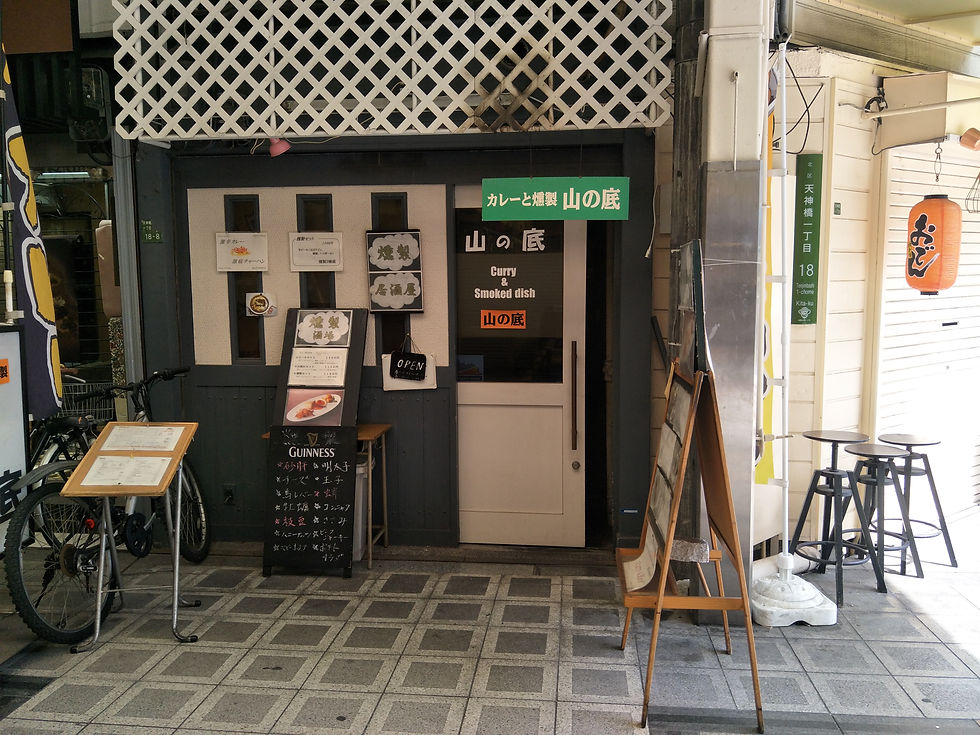

(Top: Exterior of Yamanosoko, Bottom: Curry Stew with rice)
Famished, we decided to get curry from a nearby shop at Minami-Morimachi District called Yamanosoko (山の底). Inside, there was an old man whom was preparing to close the restaurant but decided to still welcome us and cook for us. He was so nice as he tried to engage in conversations with us while he was cooking, and while he was not well with English, he still managed to get his message through to us with sign language and the menu. The food there was not extremely good but I felt that it is still worth going if you really crave for some curry in the area.


(Top: Umeda Sky Building Observatory Ticket, Bottom: Viewpoint from the observatory)
We decided to head back to Umeda via cab again to visit the Umeda Sky Building (梅田スカイビル). This building standing at 173m is famous for its panoramic view of Osaka, best viewed at sunset (We did not manage to come at sunset as we were still at Minoo when the sun was setting). While normal admission is at 1000 yen, with the Kansai One Pass, an adult admission becomes 900 yen, how nifty is that! The weather and night view was simply gorgeous and they also had a glow in the dark pavement which was very cool indeed. We could even see our hotel from the observatory and the sight of the trains travelling around Osaka, the sight was amazing! Definitely a must-see when visitng Osaka and plus, its cheaper than visiting Abeno Harukas (which just offers a better view at a higher price as well).
By the time we ended, it was late and we decided to retreat back to our accommodation as the timetable for the next day was very packed, taking the Hankyu Kyoto Line² from Umeda Station to Jūsō Station.
Day 7 (Osaka, Osaka -> Ikeda, Osaka -> Osaka, Osaka)
Already the last day? We checked out and deposited our luggage at Umeda Station taking the Hankyu Kyoto Line² from Jūsō Station and then we took the Hankyu Takarazuka Line² to Ikeda Station where we visited the Momofuku Ando Instant Ramen Museum (カップヌードルミュージアム 大阪池田). No worries, the entry is free!

(Exterior of Momofuku Ando Instant Ramen)
Inside the museum, it was packed with different designs of all the many instant ramen that were ever made (Yes, that includes your favourite NISSIN cup noodles as well). Not only so, it also allowed you to look at many infographics about the history of Momofuku Ando as well as his life-saving instant ramen. The museum also includes an atttraction that enables you to DIY your own cup noodles!


(Top: Look at the familar instant noodles on display! , Bottom: Made some instant ramen for my family)
First, you had to purchase a paper cup from vending machines at the price of 300 yen. Then, you were able to design it with the many paint markers provided and write the date of manufacture (Important because the cup noodles expire within one month). After that, you will send your cup into the factory line where employees will help and guide you into making your own DIY cup noodles! I made 4 for each member of the family and because coincidentally there were 4 different soup bases. Mmhmm, they even provide vacuum pack for your cup noodles to be packed in!

(Exterior of Fukuro no Mise)
After that, we proceeded back to Umeda Station via the Hankyu Takarazuka Line² and took a cab back to owl café Fukuro no Mise Osaka (フクロウのみせ 大阪本店). Inside we were kindly greeted and ushered to our seats where we were entitled to a drink from the menu. After that, the employees gave us information on how to pet the owls. Videography was not allowed but the employees were very helpful in placing the owls on our heads, shoulders or arm for us to take a photo with them.


(Top: Owl on the shoulder, Bottom: Owl on the arm)
The owls were so cute and it was a pleasant one hour experience for a price of USD22.16 to interact with these magnificent creatures. Definitely a place to go back for their warm hospitality!
We took the Osaka City Subway Tanimachi Line³ back to Higashi-Umeda Station/Umeda Station and decided to find lunch around that area. With Yelp, we stumbled across Umeda Hagakure Honten (梅田はがくれ 本店).

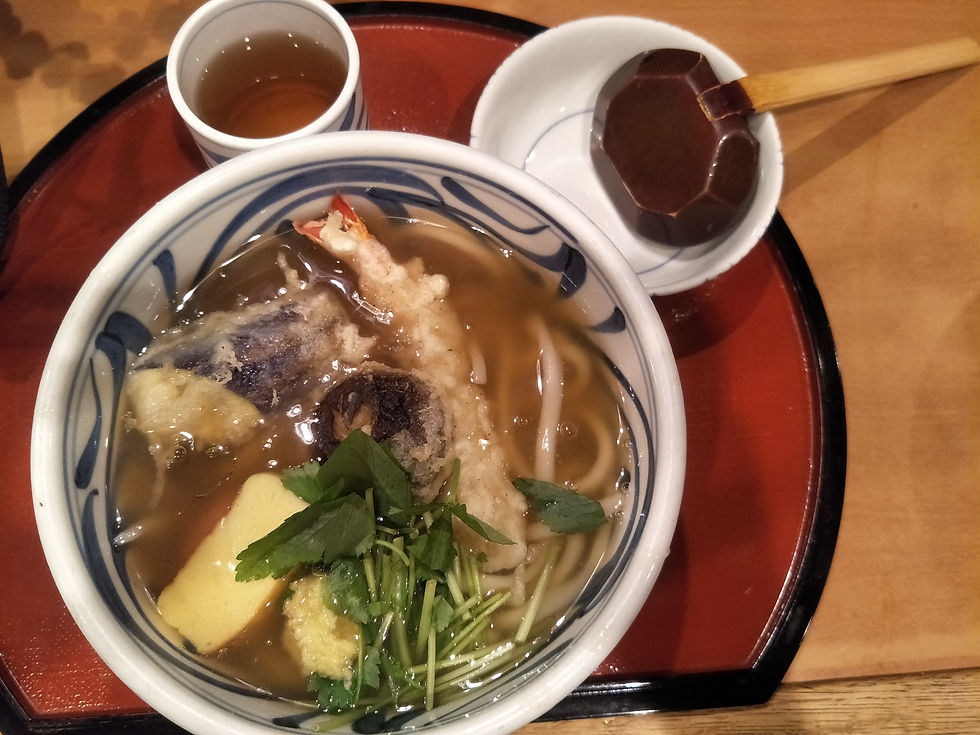
(Top: Exterior of Umeda Hakagure, Bottom: Tempura Udon)
Featured on Michelin Guide 2016 and 2017, the specialty of this place was its udon and it was packed with many people when we arrived. I ordered a serving of tempura udon at an affordable price of 900yen and boy the udon was great. The tempura was fried with an amazing crisp in its texture as well as the broth the noodle in was awesome and the serving of noodle was very generous indeed for the price. While I would love to recommend you to patronise this place, the restaurant has ended its operations on Sept 25, 2018. Sadly, we will not be able to visit this place again.
The three of us decided to round up some last minute souvenir buying around Umeda and headed to the station to collect our luggage. We then took the Osaka City Subway Midosuji Line³ to Namba Station before heading back to Kansai International Airport via the Nankai Limited Express Airport Line³.. It was time to fly off back to Singapore, transiting midway in Hong Kong. Bye Bye Japan!
First ever planned trip done and dusted!

(Two thumbs up for everything!)
Second time in Japan just 3 months from my Hokkaido trip! Many people ask why do you visit Japan often? Well, Japan just has so many undiscovered charms waiting for me to see! This trip revolved mainly around Kansai region too, which is strikingly different from the Tokyo and Hokkaido charms! Was it hard planning the trip? To be honest, it is really hard for first-timers like me to plan but its the joy and excitement on visiting many different attractions that keeps me going! It was also a great getaway from my army commitments so really appreciated my two companions for tagging me along! Now the question remains: Where shall I visit next? Till then...
Detailed travel breakdown is available here: https://drive.google.com/file/d/1a94K_sqFm5saASWhzIWnjrB3ZEfIln0m/view?usp=sharing
Photo Credits: Justin, Xuanting and Jerald
Word Count: 7070 words (as of this point)


Comments